/ 2TExc - 2T EXHAUST CALCULATOR






What 2TExc Does
2TExc is the professional, all-in-one tool for calculating, verifying, and optimizing two-stroke engines. Covering expansion chamber design, baffle & diffuser cone geometry, port and ignition timing, intake resonance, gear ratios, and powerband, it replaces fragmented calculators with a fully integrated, reproducible workflow.
- Deterministic, temperature-aware calculations based on validated two stroke theory and real engine data
- No guesswork, no trial-and-error
- Works for small and large displacement engines – motocross, motorcycle, kart, scooter, moped
- Suitable for street and race-focused builds
From simulation to fabrication. From numbers to metal.
Who 2TExc Is For
Tuners, racers, mechanics, engine builders, and enthusiasts who demand control, predictability, and repeatable results.
2TExc models the engine as a connected system: exhaust, intake, cylinder, crankcase, and drivetrain interact – software calculates them all in a single, fully integrated workflow.
Key Features
Exhaust Calculator
- Tuned length, diameters, cone angles (diffuser, baffle & header)
- 1- & 3-stage designs
- Stinger plus restrictor for the correct back pressure, controlled pressure drop, and thermodynamics
- Optimize resonance tuned RPM, wave timing, torque curve, and power band.
- Thermally stable calculations for consistent performance
Cone Designer
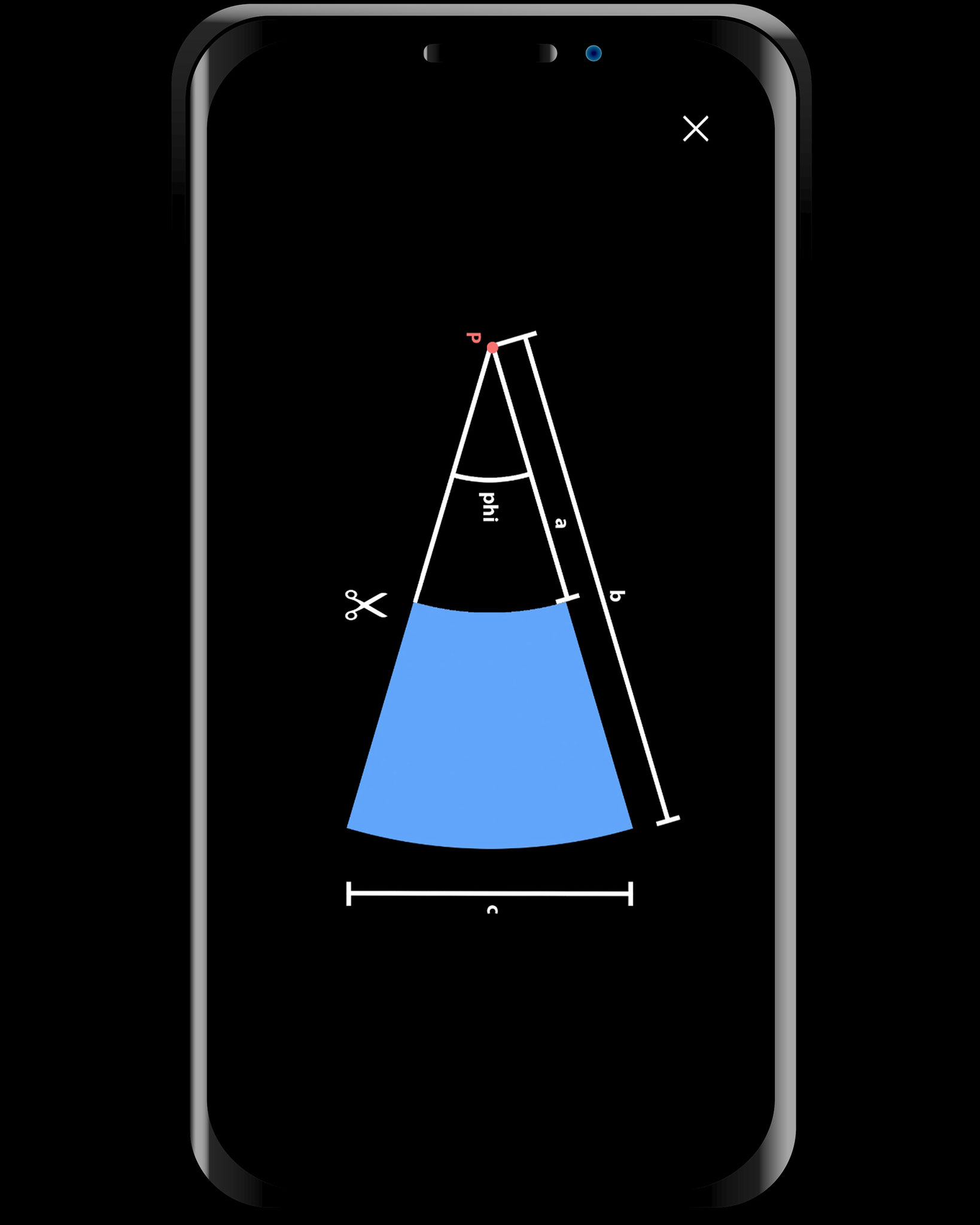
- Design baffle cones, diffuser cones, headers, and transitions
- Exact angular geometry and lengths for sheet metal fabrication
- Build optimized exhaust components without empirical prototyping
Reverse-Exhaust Verification
- Analyze existing exhaust systems
- Reverse Engineer from Geometry to chamber volume, ratios, and tuned RPM
- Compare designs, verify assumptions, identify performance potential
Ignition + Exhaust Gas Wave Calculator
- Converts ignition timing BTDC from degrees to millimeter.
- Calculate exhaust pulse velocity with temperature-dependent sound speed
- For resonance stability
- Ensures consistent behavior across operating conditions
Port Timing + Reverse Calculator
- Check the crankshaft angle for the exhaust, transfer, boost port, and intake port timings
- Use bore, stroke, connecting rod length, and port dimensions via e.g. port map
- For precise RPM range tuning and power band
- Alternatively, enter the desired port timings to get the exact port dimensions in millimeters.
Intake Resonance Optimizer + Boost Bottle
- Synchronize intake pulses with exhaust harmonics
- For both reed valve and port controlled cylinders
- Including boost bottle volume and resonance frequency
- For better throttle response and efficiency at WOT
- To improve scavenging efficiency, as the entire two-stroke system, from the carburetor to the crankcase to the muffler, shows resonance frequencies.
Gear Ratio Calculator
- Optimize primary and secondary gear ratios
- Check your gear box for smooth gear steps and RPM matching
- Smooth RPM transitions, acceleration, and top speed
- Race-ready drivetrain behavior
Why 2TExc Is Different
- Complete 2T workflow in one professional tool
- Deterministic, reproducible, thermally stable results
- Based on validated formulas and real engine data
- Projects can be saved, opened and shared with users
- 100% offline – no ads, no subscriptions
- Fast, clean interface with instant results
- Trusted by tuners, mechanics, racers, and enthusiasts worldwide
Download 2TExc now – tune your two-stroke engine with precision, professionalism, and confidence.



The Geometry of a Two-Stroke Exhaust – Technical Guide
Calculating a resonance exhaust system is one of the most complex and effective disciplines in two-stroke tuning. The length, shape, and configuration of the expansion chamber influence the engine's character more than any other component—often even more than porting or carburetor size.
This guide shows how the geometry of a 2-stroke exhaust is created, why each section has a specific function, and how modern calculation methods – such as those in the 2TExc app – enable precise and reproducible designs.
New in 2TExc is the reverse exhaust calculator: calculate any 2-stroke exhaust backwards from the given geometry back to resonance speed, volume, angles, and ratio – ideal for analyzing existing systems or optimizing designs.
1. Basics of 2-stroke resonance
Two-stroke engines use pressure waves that travel through the exhaust at the speed of sound. Any change in the pipe cross-section creates a reflection—positive or negative—and affects:
- Gas velocity
- Residual gas displacement
- Fresh gas recirculation
- Cylinder fill ratio
- Thermal stability
The goal is to design the pressure waves so that they arrive in sync with the exhaust opening, ideally during scavenging, to push fresh gas back into the cylinder and avoid losses.
Main variables:
- Temperature → affects the speed of sound
- Rotational speed
- Opening duration of the outlet
- Exhaust geometry
*Note: Reflections depend not only on the pipe cross-section, but also on local temperature gradients along the chamber.*
2. Structure of an expansion chamber
A correctly calculated resonance exhaust system consists of five main functional zones:
- Manifold
- Diffuser (1–3 stages)
- Middle section (largest cross-section)
- Countercone / reflector (1–3 stages)
- Stinger (including stinger insert)
Each zone fulfills a clearly defined task and influences flow, temperature, and resonance.
3. The manifold – controlling the first vacuum wave
The manifold generates the first vacuum wave when the outlet opens and accelerates the gases for rapid evacuation of the combustion chamber.
Factors:
- Too large a diameter → weak scavenging effect
- Too small a diameter → high back pressure, overheating
Length: Depends on maximum power speed, exhaust port opening angle, and exhaust gas temperature.
The longer the manifold, the later the vacuum wave takes effect → power peak shifts downward.
2TExc calculates these parameters for precise and efficient action at the outlet window.
4. The diffuser – fill ratio booster
The diffuser expands the exhaust gas volume over 1–3 cone segments. It primarily generates a negative pressure wave, but also influences temperature and density profiles that control the backflow.
Rules:
- Steep angles → stronger negative pressure wave, but unstable and thermally critical (>10–12°/step)
3-stage diffusers stabilize flow and optimize the resonance band:
- Stage 1: 4–8° → stable flow
- Stage 2: 8–12° → strong negative wave
- Stage 3: 4–8° → fine resonance adjustment
2TExc calculates angles, lengths, diameter transitions, and the resulting wave propagation time → maximum negative pressure at the end of the overflow phase.
5. Middle section/belly – stabilize gas volume
The belly has the slowest flow velocity. Influence:
- Temperature stability
- Character formation of the counter wave
- Resonance bandwidth
Risks:
- Too small → high temperatures, narrow peak
- Too large → sluggish waves, weak recoil
2TExc optimizes the center section length and diameter based on the target speed, taking all important factors into account.
6. Counter cone – Positive recirculation
The counter cone generates the crucial positive pressure wave that pushes the fresh gas back into the cylinder when it arrives at the outlet and briefly seals the combustion chamber.
*Note: The reflection occurs over the entire length of the counter cone and not just at the end.*
- Steep angle → hard peak, narrow band range
- Flat angle → smoother power delivery, wider band
2TExc calculates angles, lengths, and diameters precisely based on wave propagation time and temperature.
7. Stinger and stinger insert – thermal, pressure, and resonance
The expansion chamber is the heart of two-stroke performance. Its geometry governs cylinder filling, backflow, torque characteristics, powerband width, and thermal stability. 2TExc converts complex exhaust physics into precise, reproducible, and thermally stable calculations.
The Stinger does not produce strong reflection, but rather dampens and limits the exhaust gas flow.
Functions:
- Thermal stabilization → prevents back pressure, piston seizure, overheating
- Control of main resonance energy → determines how strongly pressure waves act
- Fine reflection adjustment → slightly shifts resonance frequency
Calculation values:
- Air-cooled engines: 0.58–0.62 × outlet cross-section
- Water-cooled engines: 0.55–0.60 × outlet cross-section
2TExc calculates the diameter based on exhaust gas flow rate, target speed, thermal stability, and desired back reflection.
8. Resonance length – the core of every calculation
The resonance length is the distance that a pressure wave needs to travel from the outlet to the counter cone and back in order to act synchronously with the opening.
BUT: Without the correct outlet timing and temperature-dependent sound velocity, the calculations of the tuned length shift unpredictably.
Parameters taken into account:
- Exhaust timing
- Sound velocity (temperature-dependent)
- Cone transitions
- Pipe diameter
2TExc simulates the complete wave propagation time, not just approximation formulas.
Result:
- Exact resonance speed
- Reproducible designs
- Less trial and error
9. Modern software revolutionizes construction
- All angles, lengths, and diameters calculated exactly
- Precise resonance length and stinger dimensioning
- Full integration of timing, inlet resonance, and transmission ratios
Benefits: faster construction, less material, stable performance, higher fill level.
10. Advantages of 2TExc
- Precise 1- & 3-stage diffuser/counter cone
- Precise resonance lengths
- Safe stinger diameter
- Visualized control
- Integration of timing, inlet resonance, and transmission
2TExc covers the entire two-stroke tuning workflow—from timing to exhaust resonance to transmission.
With the Reverse Exhaust Calculator, existing systems can be analyzed retrospectively to check resonance, volume, angle, and ratio and optimize them in a targeted manner.
Conclusion
A correctly calculated expansion chamber is not an art project, but precise engineering work. Every angle, every diameter, and every length fulfills a physical function.
With the right tools, a system can be:
- predictable
- reproducible
- thermally stable
- powerful
- results without countless prototypes
2TExc enables exactly that: fast, reliable, and technically sound calculation of a complete resonance system—from mopeds to MX racing engines.
Download 2TExc now – professional, precise, and fully reproducible tuning for all two-stroke engines.